Ireland's Proposed Savings and Investment Account: What We Know So Far
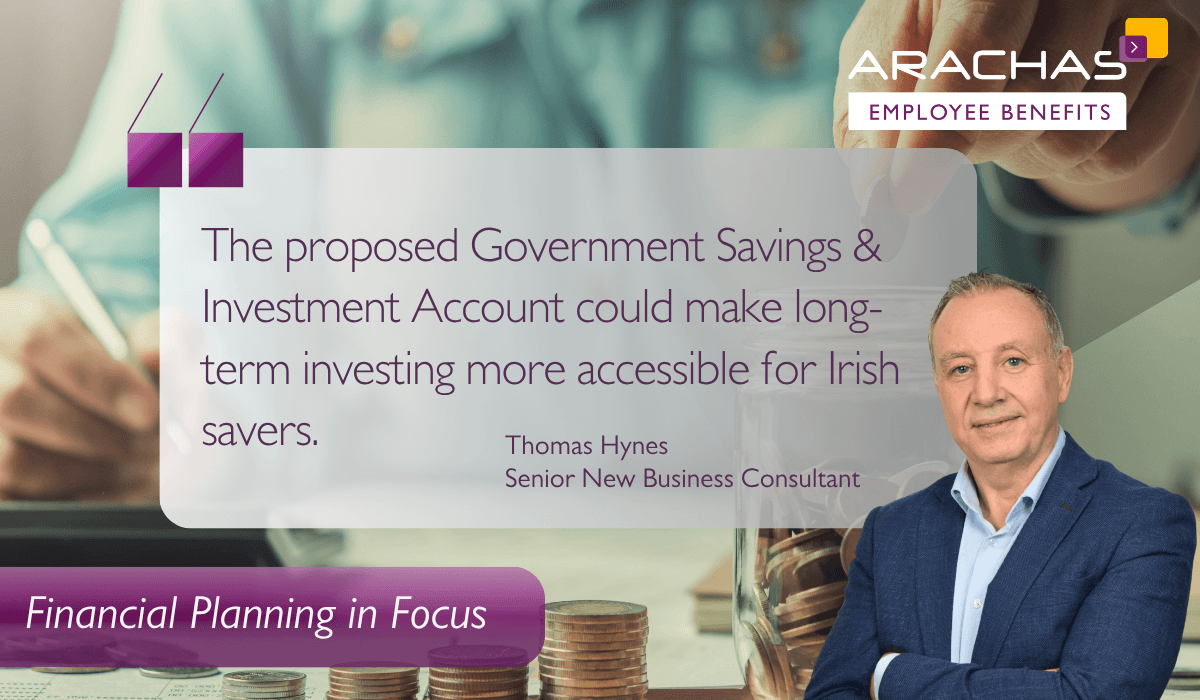
The Government has announced plans to introduce a new savings and investment account, expected to launch in 2027. While the broad concept has been flagged for some time, important details, including the contribution limits, eligible providers and precise tax treatment have been slightly vague. These are expected to be confirmed on Budget Day, 6 October.
The proposed account is intended to encourage more households to move beyond traditional cash deposits and participate in financial markets. It also reflects the wider objective of the European Union’s Savings and Investment Union strategy, which aims to improve access to investment opportunities and channel more capital towards businesses and long-term economic growth.
Irish households currently hold approximately €170 billion in deposit accounts. Although cash savings provide security and liquidity, inflation can gradually erode their purchasing power, particularly when deposit interest rates fail to keep pace with rising prices.
The proposed account is intended to provide individuals with a simpler and more accessible way to invest in mainstream financial assets. Similar arrangements already operate in other countries, including the UK’s Individual Savings Account (ISA) and Sweden’s Investment Savings Account (ISK). By providing a more straightforward tax framework, the Government hopes to encourage greater long-term investment among Irish savers.
Ireland’s current investment tax system
The existing tax rules on investments are complex and vary depending on the type of investment held. For example:
Capital Gains Tax is charged at 33% on realised gains from the disposal of shares and other qualifying assets, subject to applicable exemptions and reliefs.
Insurance based investment funds are subject to exit tax, currently charged at 38%. The deemed disposal rules mean that tax is charged at the 38% rate every eight years on gains arising from these funds, even where the investment has not been sold.
These rules can make it difficult for investors to compare products and understand their potential after-tax returns. They may also discourage individuals from investing for the long term.
Proposed features of the new account
Although the final structure has not yet been confirmed, the proposed account is expected to combine features from international models such as the UK ISA and Swedish ISK.
The anticipated framework may include:
- A tax-free investment threshold
- A flat rate of tax on investment returns above that threshold
- The removal of the deemed disposal requirement within the account
- Tax calculation, reporting and payment by the account provider on the investor’s behalf.
- Access to a broad range of mainstream investments
- No minimum contribution requirement
- No minimum holding period.
- No penalty for withdrawing funds.
- No tax implication for transfers between participating providers.
Eligible investments are expected to include listed shares, Exchange Traded Funds (ETF’s), listed bonds and other financial instruments traded on regulated markets. High-risk or complex products, such as cryptocurrencies and derivatives, will not be included.
Is the proposed account right for everyone?
The simplification of investment taxation will be a positive development, but the new account will not necessarily be suitable for every investor.
There is still uncertainty regarding:
- Which financial institutions will offer the accounts
- The precise investment options available
- The annual contribution limit
- The tax rate applying above the tax-free threshold.
- Whether the account will be more attractive than existing investment products
Also, traditional insurance-based savings providers will continue to offer planning opportunities that are not necessarily available through the proposed account, such as arrangements involving the small gift tax exemption and Section 73 plans, which can assist with inheritance and gift-planning objectives.
Consequently, investors should compare the full range of features, costs, tax treatment and planning benefits before deciding where to place their savings.
What potential investors should consider?
Before investing, individuals should establish a clear financial plan.
Prepare a realistic budget
Review income and expenditure to determine how much can be saved regularly without compromising day-to-day financial security. An appropriate emergency fund should generally be considered before committing money to longer-term investments.
Define the investment time horizon
Consider whether the money is being saved for a specific objective, such as education, a home purchase or retirement—or whether the intention is to invest over the long term without a defined spending date. The appropriate investment strategy will depend heavily on when the funds may be needed.
Understand the tax treatment
Tax rules differ considerably between deposits, shares, investment funds, pensions and insurance-based investment products. Investors should assess the likely after-tax return rather than focusing solely on the headline performance of a product.
Assess risk capacity and risk appetite
An investor’s risk capacity reflects the amount of loss they could financially withstand, while risk appetite reflects their willingness to accept fluctuations in value.
Investments should be selected to reflect both factors. A product may be suitable in terms of potential return but inappropriate if the associated volatility could cause the investor to sell at the wrong time.
Consider charges and product flexibility
Fees, dealing costs, management charges and withdrawal conditions can have a material impact on long-term returns. Investors should also assess whether they can change providers, alter contributions or access their money when circumstances change.
Conclusion
The proposed savings and investment account represents a potentially significant change to how Irish individuals invest. By simplifying the tax treatment and removing the deemed disposal requirement the scheme could make investment more accessible to a wider range of households.
The account may also encourage savers to reduce their reliance on cash deposits, which can deliver limited real returns after inflation, and consider investments with greater potential for long-term growth.
Frank Glennon (Life & Pensions) Limited, trading as “Arachas Employee Benefits”, “Arachas Financial Planning”, “Glennon”, “Glennon Employee Benefits” and “Glennon Financial Planning”, is regulated by the Central Bank of Ireland.