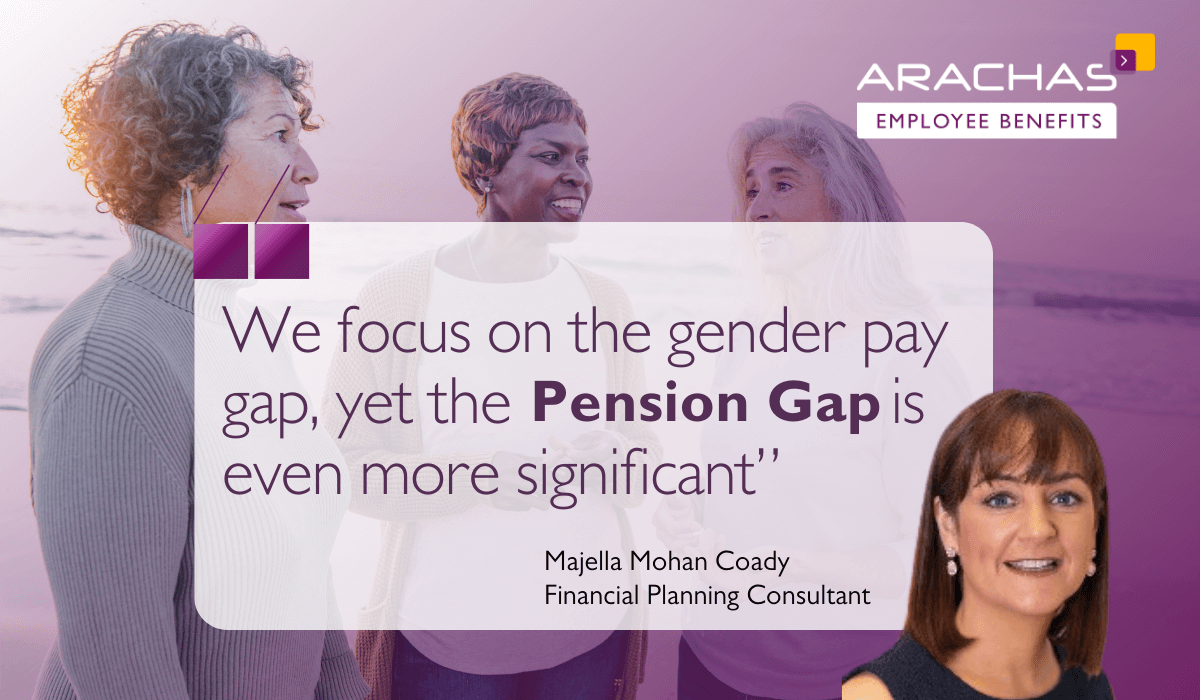
Many discussions about workplace equality focus on the gender pay gap, yet the issue that has the greatest impact on women’s financial futures in Ireland is the gender pension gap.
Previous Irish Life research shows a 36% difference in pension outcomes between men and women at retirement age, effectively requiring women to work eight additional years to reach the same pension pot. Pension auto enrolment through the Government’s new My Future Fund will improve access to saving, but it will not close the gap on its own. Much of the inequality is driven by earnings patterns, part‑time work, caring responsibilities and contribution gaps that disproportionately affect women over the course of their careers.
The challenge is reflected across Europe, where women receive pensions 22% lower than men on average. Understanding the drivers behind this gap and the practical steps that can strengthen women’s retirement outcomes, is essential.
Drawing on insights from our financial planning & employee benefits teams this article outlines the key factors influencing the pension gap and the actions that can make a meaningful difference.
Lower lifetime earnings and shorter careers – Irish Life analysis shows women earn 22% percent less on average and spend around six fewer years in paid employment, which reduces both employee and employer pension contributions over time.
More women in part-time work – CSO figures show women accounted for 67.3% of all part-time workers in Q4 2024 while representing only 41.9% of full-time workers. Part‑time roles typically involve lower employer contributions and reduced long‑term earning potential.
More women providing unpaid care – Census 2022 recorded 299,128 unpaid carers in Ireland, with women making up 61%. Almost a third provide over 43 hours of unpaid care per week. This caring period often restricts paid employment and creates pension contribution gaps during pivotal mid‑career years.
Investment strategy differences – OECD research shows that women often hold lower-risk investment allocations in asset‑backed pension plans. Over time this can leads to slower pension growth compared with men.
Similar saving habits, different outcomes – Irish Life found that women and men start saving at the same average age and contribute similar percentages of salary. This indicates the gap is driven by inconsistent working patterns and income differences, rather than willingness or interest in pensions.
Additional top‑ups and AVC behaviour – Research also shows that men are 60% more likely to make single‑premium Additional Voluntary Contributions (AVCs). This behavioural difference contributes to wider long‑term pension outcomes.
Lower use of digital pension tools – Irish Life also found that men are more proactive in using digital tools such as the Irish Life Pension Portal and Tax Calculator. Members who have registered for the Pension Portal are projected to retire with funds 54 percent higher on average than those who have not registered, reflecting the value of regular monitoring and engagement.
Financial Planning: Insights from Sean Buggy, Associate Director Financial Planning
Sean Buggy works with individuals at different stages of their financial planning journey and regularly sees how career patterns and income differences influence women’s ability to build pension savings at the same pace as men, particularly where part‑time work or caring responsibilities arise.
“In financial planning conversations, you see the same pattern across the industry. The reality is that women face structural barriers such as time out of the workforce and lower average salaries, so their projected retirement savings tend to lag behind men of similar age and career stage. But with guidance and more consistent engagement, those gaps can be narrowed significantly.”
Sean notes that early awareness of the long‑term impact of career decisions can help individuals make more informed adjustments throughout their working lives. He adds:
“Early action makes a meaningful difference. Small, steady decisions taken throughout a career can have a transformative impact on long term retirement outcomes, particularly where someone may have periods away from the workforce.”
The Employer Opportunity: Insights from Barry Sinnott, Associate Directors at Arachas Employee Benefits
Employers can play a significant role in helping reduce the gender pension gap. European evidence shows that career interruptions and reduced working hours are the biggest contributors to women retiring with smaller pensions and these are areas where employers can provide meaningful support.
Barry Sinnott, who leads the Arachas Employee Benefits team and advises employers on pension and benefit strategy, has seen these patterns across many organisations. Drawing also on insights from his previous experience in Irish Life, Barry explains:
“In most cases the pension gap is not caused by a lack of interest or engagement. It is usually driven by structural factors such as income levels, time out of the workforce and the loss of employer and employee contributions during periods of maternity or other caring leave.”
Barry suggests clear policies and practical supports are key.
“Employers are in a strong position to influence retirement outcomes. Policies that support continuity of employment and offer inclusive benefits, including consideration of contributions during leave, make a real difference to closing the gap.”
Practical steps employers can take include:
- Ensuring part-time and variable‑hour staff have full access to pension schemes
- Embedding pension discussions in maternity, parental or caring leave processes
- Reviewing how employer pension contributions are treated during leave periods
- Encouraging early engagement with AVCs
- Providing clear, accessible pension communication and digital guidance
- Reviewing flexible working, progression pathways and returner support
Supporting Women Through Awareness: Insights from Anna Marie O’Sullivan, Employee Benefits Senior Consultant
Anna Marie regularly sees how easily pension planning can be pushed aside when work, family and caring demands build up.
“In our work with members, we often see pension planning slip down the priority list, especially for women balancing work, family and caring responsibilities. Even small increases before and after time out of the workforce can make a meaningful difference to financial independence later in life.”
She notes that many people underestimate the long‑term impact of reduced hours or career breaks on their future pension income.
She continues:
“Many women plan ahead for everyone except themselves. Retirement planning does not need to be complicated. It starts with knowing where you stand and taking small, manageable steps that fit your circumstances.”
Practical Steps Women Can Take Today
While the structural factors behind the pension gap are significant, there are practical steps women can take to strengthen their long‑term financial position.
1. Make the most of AVCs – Additional Voluntary Contributions, even at low levels, can have a meaningful cumulative effect when started early.
2. Use digital tools to stay informed – Platforms such as the Irish Life Pension Portal help you track progress, model AVCs and understand projected retirement income.
3. Plan proactively for career breaks – If you expect to take maternity, parental or caring leave, review what it means for your pension and consider:
- Keeping a small contribution going if affordable
- Increasing contributions before or after the break
- Understanding employer supports that may apply
4. Review your pension regularly – Check your fund value, contributions and projected retirement income at least once a year. Small changes made early have a much greater long-term impact.
5. Increase contributions when circumstances allow – If you return from leave or move from part‑time to full‑time work, consider a small increase to help compensate for earlier gaps.
6. Understand your State Pension eligibility – Review your PRSI record and ensure any eligible caring periods are captured. Knowing how the State Pension aligns with your workplace pension helps build a clearer retirement plan.
7. Seek advice early – Don’t wait until they are close to retirement to seek guidance. Engaging with advice earlier in your career can help you understand your options, choose an appropriate investment strategy and make more informed decisions.
Looking Ahead
Auto‑enrolment has widened access to retirement saving, but closing the gender pension gap requires more than participation. It requires awareness, supportive workplace practices and sustained engagement at key career stages.
Julie Galbraith, Chief Business Officer at Arachas, emphasises:
“As employers, we have a responsibility to understand how career patterns and caregiving responsibilities influence long‑term financial outcomes. Supporting employees with clarity, structure and inclusive policies is an important part of building a workplace where everyone can plan confidently for their future.”
International Women’s Day is a reminder of the progress made and the work still ahead. Ensuring women can retire with financial independence must remain a priority for employers, advisers and policymakers. With early planning, clear information and supportive workplace environments, we can help deliver stronger retirement outcomes for women across Ireland.
Frank Glennon (Life & Pensions) Limited, trading as “Arachas Employee Benefits”, “Arachas Financial Planning”, “Glennon”, “Glennon Employee Benefits” and “Glennon Financial Planning”, is regulated by the Central Bank of Ireland.
Sources:
- Pensions and insurance | OECD
- Irish Life Employer Solutions – Gender Pension Parity Report (2024)
- OECD – Pensions at a Glance 2025
- Health, Disability, Caring and Volunteering Census of Population 2022 – Summary Results – Central Statistics Office
- CSO Census 2022 – Carers profile
- Gender Pay Gap Reporting Ireland 2025: What It Means, Who Must Report, and Why It Matters
- CSO Labour Force data as reported by RTÉ: Women in the labour force (2025)
- TUC: Gender Pensions Gap Report (2025)
- Pension Research Council: Gender differences in retirement investment patterns (2024)