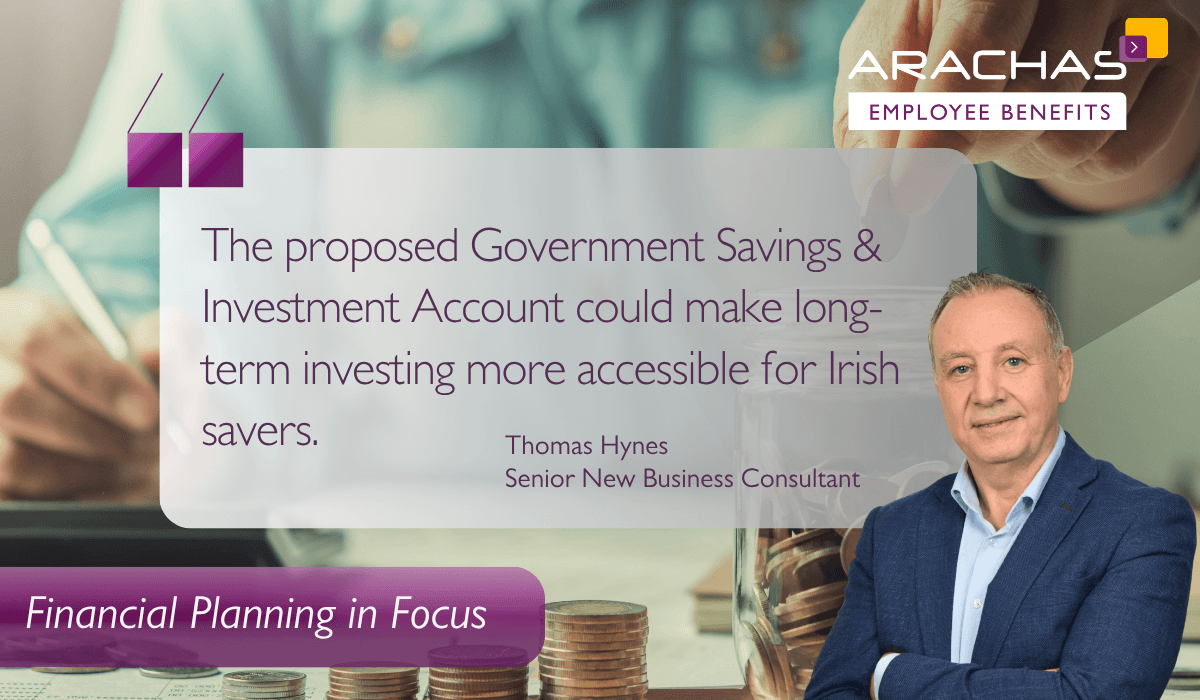
After much speculation and debate, the recent budget finally revealed details of the new government savings account.
The new plans were one of the headline measures in Budget 2027, with the intention of making investing simpler and more accessible for Irish citizens. The accounts are due to open in July 2027, subject to legislation in the Finance Bill.
Key Features of the New Account
The new accounts will offer a €50,000 lifetime tax-free threshold and allow eligible residents to invest up to €12,000 a year with no minimum contribution. It is expected that the full annual contribution will be allowed for 2027 when the plans commence.
There will be a 1% annual tax applying to the portion of an account’s value above a €50,000 lifetime threshold. This charge will be calculated on the account’s value above €50,000 and not on investment profits. Therefore, investors may owe tax even if their investments have fallen in value, provided the account remains above the €50,000 threshold. The value is expected to be assessed daily, with the average daily value used to determine whether tax is due and how much. Provider fees and charges are separate and could reduce investment returns.
Existing tax rules, including the 35% exit tax that applies to many investment funds and the deemed-disposal rule, will not apply to assets held in the new accounts. Providers will manage tax reporting, administration and payment.
Transfers between providers may be possible, however, the details remain unclear at this point.
Irish residents aged 18 or over who hold a Personal Public Service Number (PPSN) will be eligible to open an account. The government has explicitly said that there will be only one account per person.
Eligible investments and providers
Permitted investments are expected to include listed shares and bonds, financial instruments traded on regulated markets, retail investment funds and insurance-based investment products. Highly complex or risky products such as derivatives and crypto assets are to be excluded.
Eligible providers are expected to include MiFID-authorised investment service providers, regulated fund managers and insurance companies. Financial advisers, credit unions and An Post may also play a role in distributing the accounts.
Is This Account Right for Everyone?
The new savings account may appeal to individuals who already have savings in the bank or have surplus income available for investing and are looking for a simpler way to build long-term wealth. It could be particularly attractive to those who have already established an emergency fund and are making appropriate pension contributions but are seeking additional tax-efficient investment opportunities.
However, whether the account is suitable will depend on an individual’s financial circumstances, objectives, investment time horizon and attitude to risk. As with any investment, the value of investments can fall as well as rise.
Before investing, individuals should consider how the account fits within their wider financial goals. This may include assessing whether they have sufficient emergency savings, whether high-interest debt, such as credit card balances and personal loans, should be repaid first and whether making additional pension contributions to maximise tax relief could be a more appropriate use of available funds. Other considerations may include inheritance and gift tax planning opportunities, where appropriate.
The right approach will depend on individual circumstances and objectives. What works for one person may not be the best solution for another.
Financial Planning Remains Key
Whilst the new accounts can be seen as moving in the right direction by simplifying the savings and investment landscape for many people, they should be viewed as one piece of the overall financial wellbeing jigsaw.
The key is to understand your short, medium and long-term financial goals and ensure your savings and investment decisions support them. The new government savings account may have an important role to play, but it is only one element of a broader financial plan.
Engaging with a financial planner is a good start, as they can help build a strategy tailored to your circumstances and ensure your savings and investment decisions support your goals both now and in the future.
Frank Glennon (Life & Pensions) Limited, trading as “Arachas Financial Services”, “Arachas Employee Benefits”, “Arachas Financial Planning”, “Glennon”, “Glennon Employee Benefits” and “Glennon Financial Planning”, is regulated by the Central Bank of Ireland.